Ball Knowledge Tables Guide: Join Matches and Score
Use this Ball Knowledge tables guide to join duels or group matches, practice against the Noob, and learn how rare answers boost your seven-round score.
Jump to
How to Join a Table in Ball Knowledge
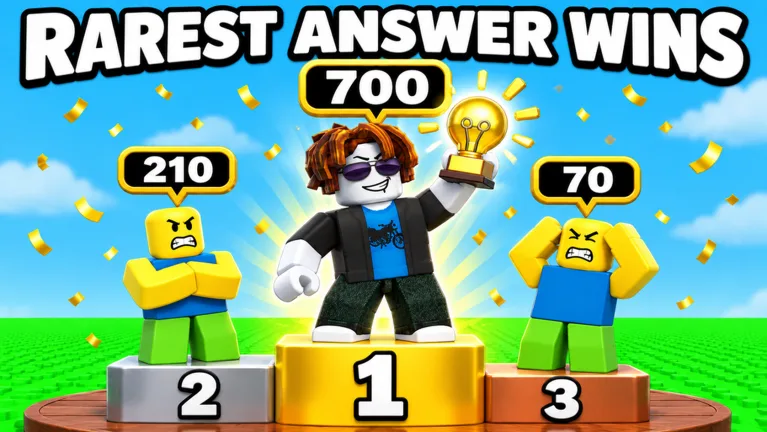
Your match starts with a seat, but your score depends on what you type. This Ball Knowledge tables guide explains how to join a match, choose a table size, and turn less obvious answers into points. With no speed bonus, taking a moment to think matters more than answering immediately.
Open Ball Knowledge on Roblox, then follow these steps:
- Walk up to a table and sit down.
- Wait for opponents to join.
- Read the shared question and type one answer.
- Watch everyone’s answers appear together, with results revealed from Common through Legendary.
- Complete seven rounds; the player with the highest total score wins.
If everyone nearby is already playing, wait for a match to finish before trying to join those players. Sitting at an empty table can also give someone else a place to challenge you.
Table Sizes: Duels, Groups, and the Main Stage
Ball Knowledge offers four competitive table formats:
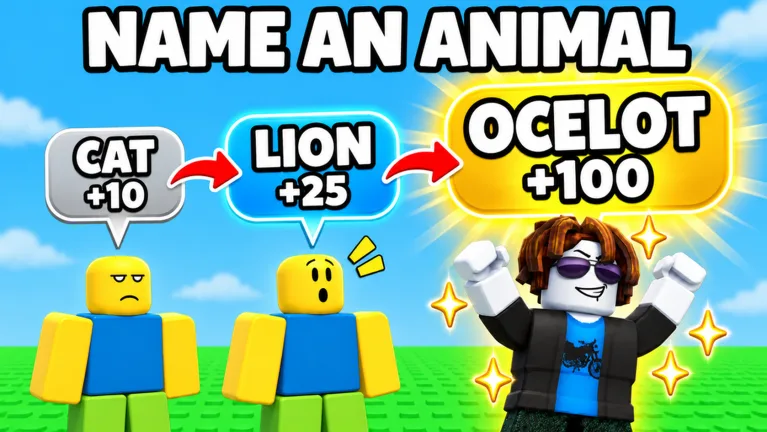 Image: Roblox / Gray Games Official
| Table format | Players |
|---|---|
| 1v1 duel | 2 |
| 3-player battle | 3 |
| 4-player table | 4 |
| Main-stage table | 8 |
Choose a table that fits your group. Bring one friend to a duel, or gather a larger group for a three-player, four-player, or eight-player match.
Every player at the table receives the same question. The format changes how many people compete, while the central task stays the same: submit an answer that fits the prompt and earns a strong rarity score.
The server limit is 30 players. That is the capacity of the whole server; the largest individual table holds eight.
How Answer Rarity Affects Your Score
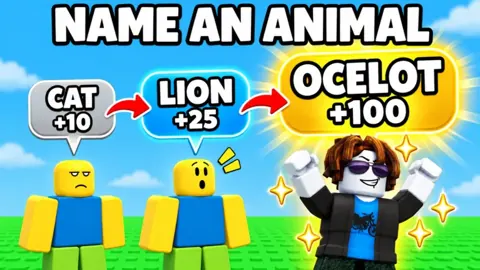
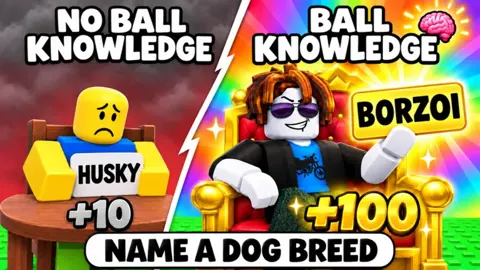
Common answers earn fewer points, while rare answers earn more. For the prompt asking you to name a pet, Dog earns 10 points and Fennec Fox earns 90. Legendary answers can earn 100 points.
That difference makes answer selection worth your attention. Before submitting, think beyond the first familiar example that comes to mind—but keep your answer within the question’s category.
Use the thinking time available. There is no speed bonus, so rushing an obvious answer gives you no extra scoring advantage. Aim for a less obvious answer you know fits, rather than an unfamiliar word you cannot place.
Small spelling mistakes are accepted, which helps when you remember an answer more clearly than its spelling. Still, write the name as accurately as you can, especially for specific species, characters, and titles.
Read the Whole Prompt Before Answering
An unusual answer only helps when it answers the actual question. Several prompts draw a clear distinction between a broad association and the requested type of thing:
- Art or craft: Answer with a type, such as painting or carving. Mona Lisa names a particular artwork.
- Tree species or groups: Think of a tree name, such as Maple, rather than the material “wood.”
- Car model: Name a specific model instead of only its brand.
- Perfect square: Four fits because it equals a whole number multiplied by itself.
Read any explanatory wording attached to the question before committing. A prompt asking for a real bird requires a bird; a question about a movie requires a movie title.
With more than 135 questions spanning animals, food, countries, sports, science, music, and video games, expect categories outside your strongest subject. Keep a valid answer in mind while considering something less obvious.
Practice Against the Noob and Earn Match Rewards
Use the practice tables to play against the Noob before challenging other players. Try them when you want to get comfortable reading prompts, entering answers, and following the rarity reveals.
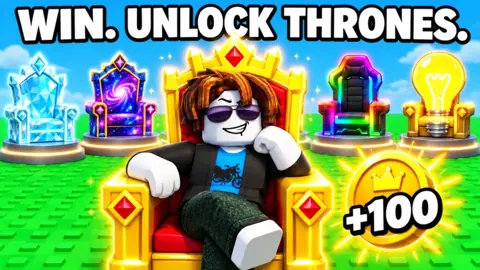
Competitive matches also award coins that unlock chairs, thrones, and answer effects. Keep playing for those customization options, and claim the free daily reward when you return.
For longer-term targets, the leaderboards track Top Wins, Top Streaks, and Best Score. Pick the target you want to pursue, then use each match’s answer reveals to expand the examples you can recall for the next question.
Quick Links
Ball Knowledge Answers Guide: Smarter Picks to Win
Use the Ball Knowledge answers guide to match tricky prompts, understand rarity scores, and avoid common mistakes across seven-round Roblox trivia matches.
Ball Knowledge First Win Badge: How to Win Your Match
Earn the Ball Knowledge first win badge with tips for seven-round matches, rare answers, and avoiding category mistakes. Start chasing your first victory.
Ball Knowledge 2x Coins: Price, VIP Stacking & Perks
Ball Knowledge 2x Coins costs 149 Robux and doubles match coins. Compare its perks with VIP, learn what coins unlock, and plan your next cosmetic purchase.
Ball Knowledge Top Wins: How to Win More Table Matches
Climb the Ball Knowledge Top Wins leaderboard with smarter answers. Learn how seven-round matches, rarity points, and practice tables help you win more.